Nine scenes, and what each one is hard for.
A capture is only as useful as the place it was shot in. These are the nine Unreal scenes behind every number on this site — what is in them, what they put in front of a detector that the others do not, and the frames they produced. If you want the data itself rather than the scene, the datasets are free and each one links back here.
- Scenes
- 12
- Frames captured
- 3,590
- Engine
- Unreal Engine 5.8
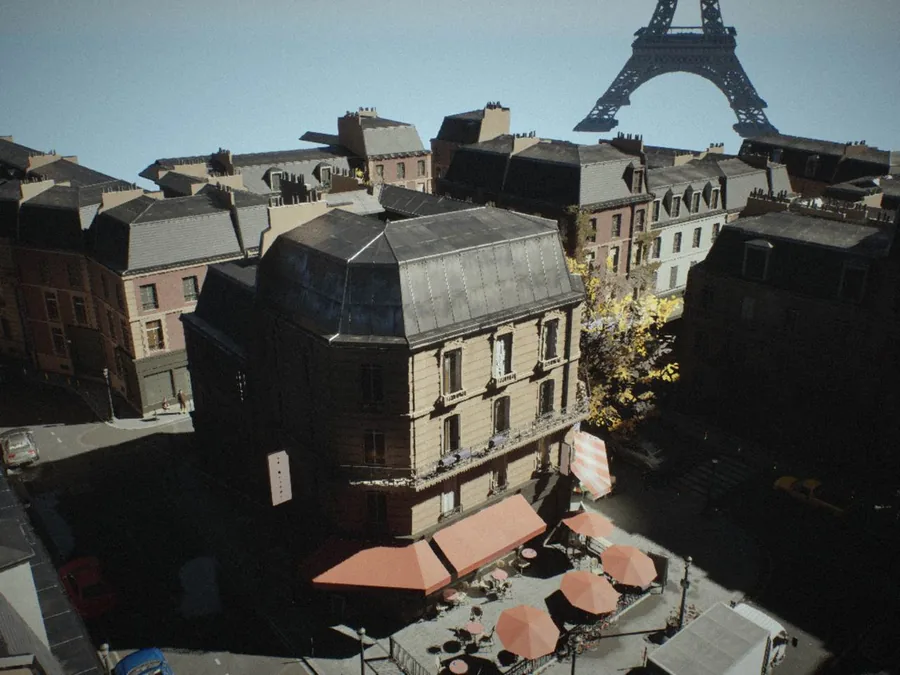
Parisian street
A street block with a terrace, parked cars and the tower behind the rooftops, captured across a full range of light.
7 frames
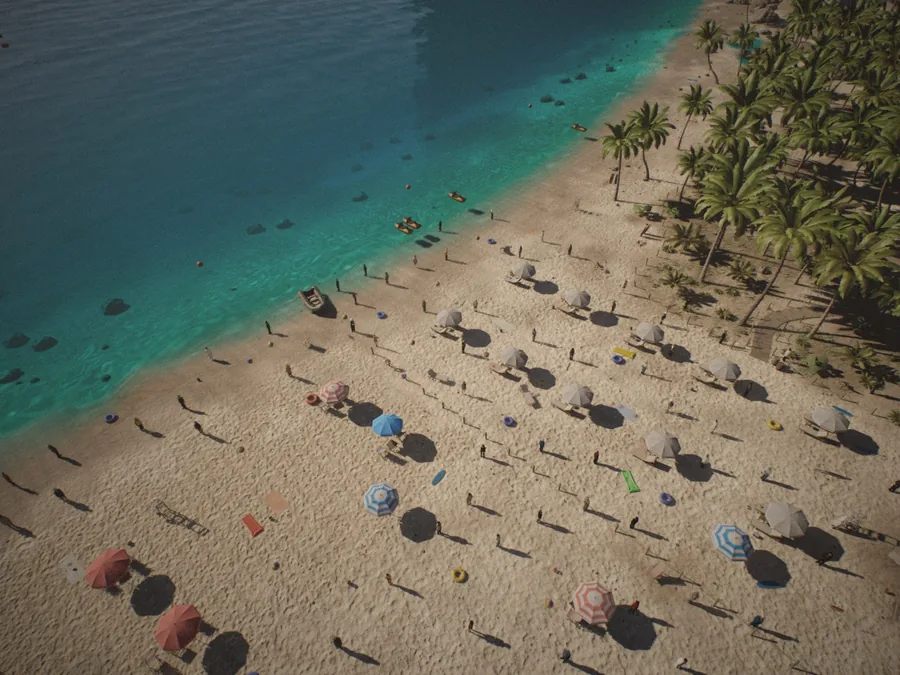
Beach
Shoreline, palm grove and open sand, shot from above with people and parasols small in frame.
7 frames
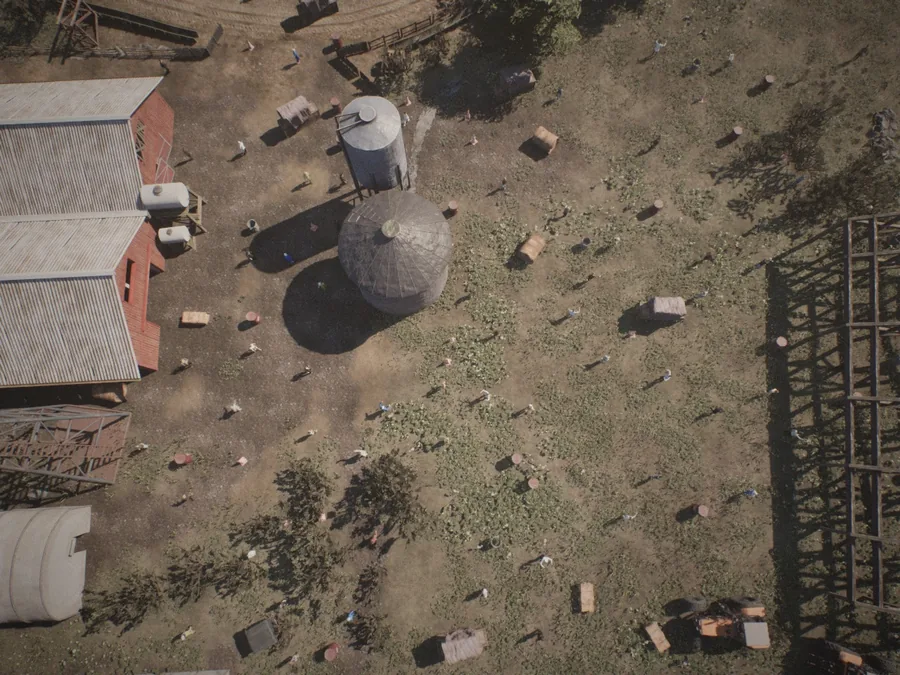
Barnyard
A farmyard shot almost straight down from low altitude: silos, hay, a tractor and scattered props.
7 frames
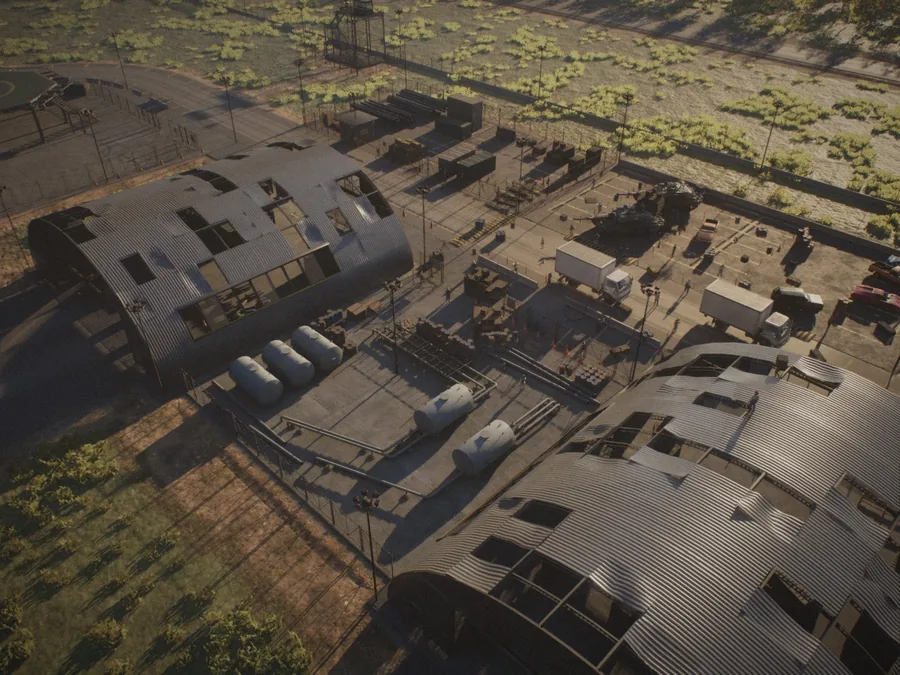
Airbase
Hangars, aprons and hardstanding with vehicles and ground clutter over open concrete.
7 frames
The other five
One published frame each, and no gallery yet. They are listed with the picture that exists rather than with a page built around the ones that do not, and each links to its capture.
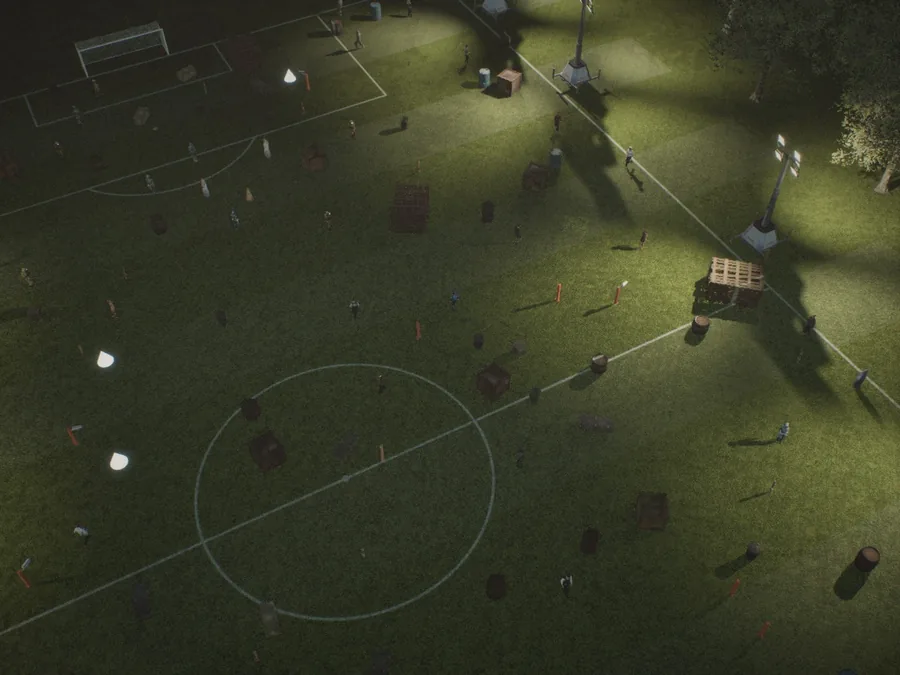
Football pitch at night
Above the floodlights, 24–52 m, 1280×960
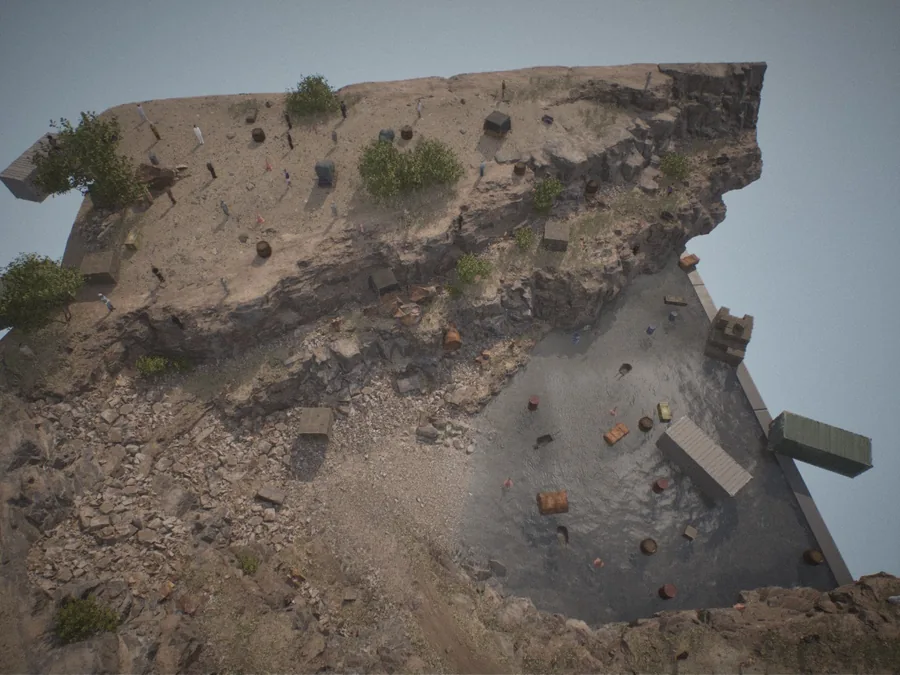
Quarry
Zones over the pit, 18–45 m, 1280×960
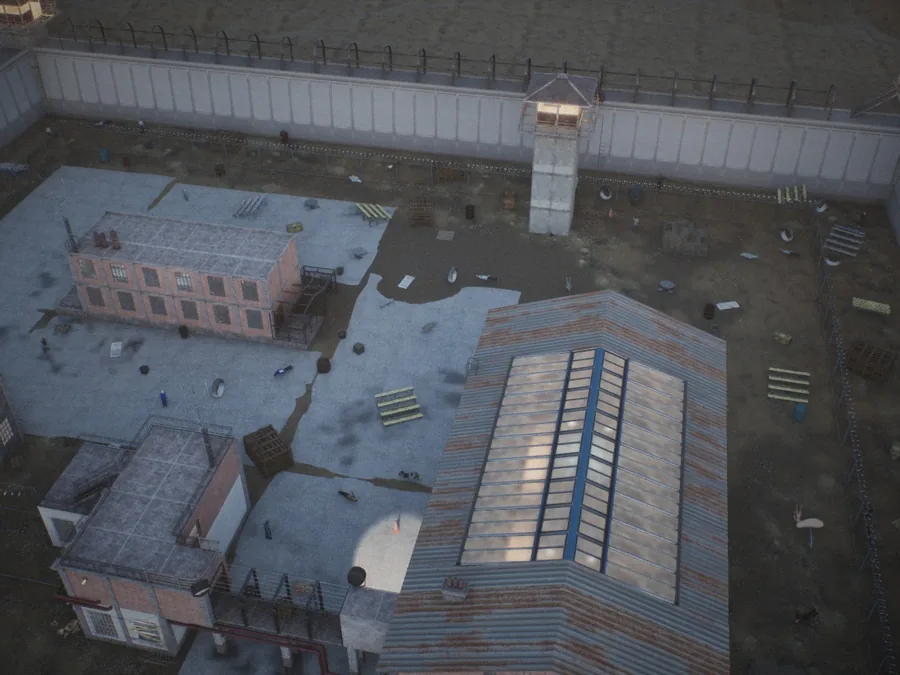
Prison yard
Zones above the wall, 28–54 m, 1280×960
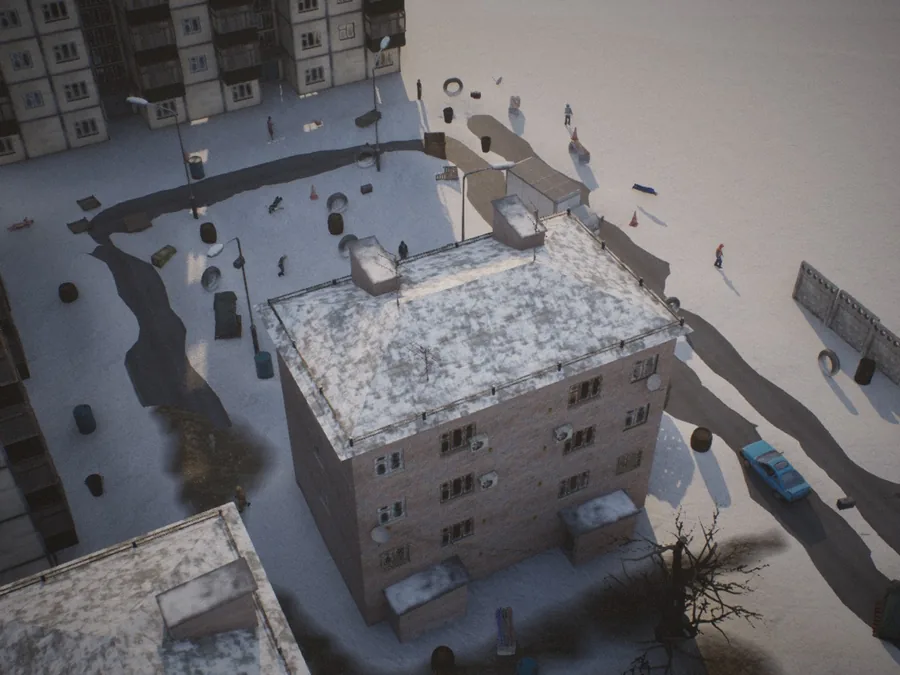
Russian winter town
Above the roofline, 36–62 m, 1280×960
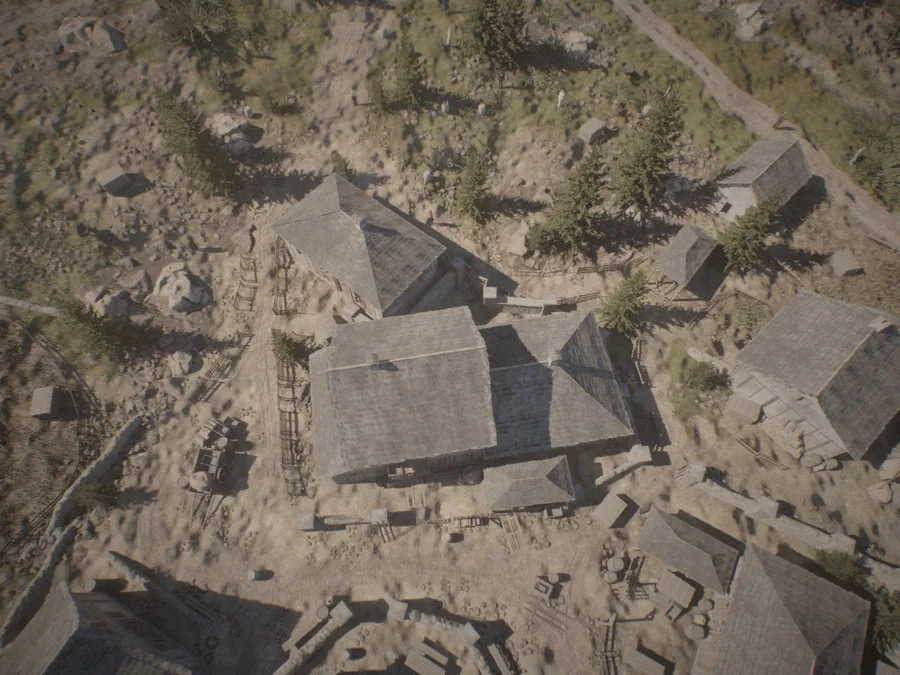
Mountain village
Zones over the slope, 1280×960
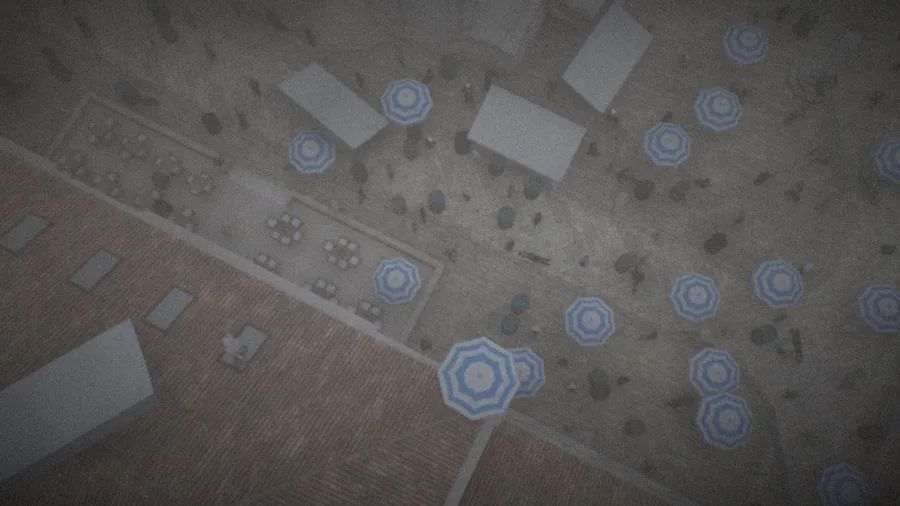
Dubrovnik old town
Aerial zones over the squares, 18 to 45 m, 1280×720
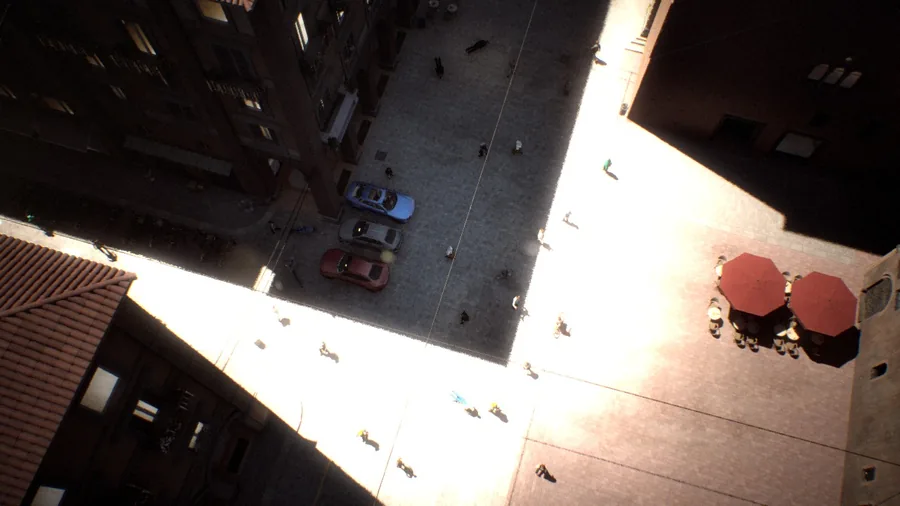
Bologna porticoes
Aerial zones over the piazza, 28 to 50 m, 1280×720
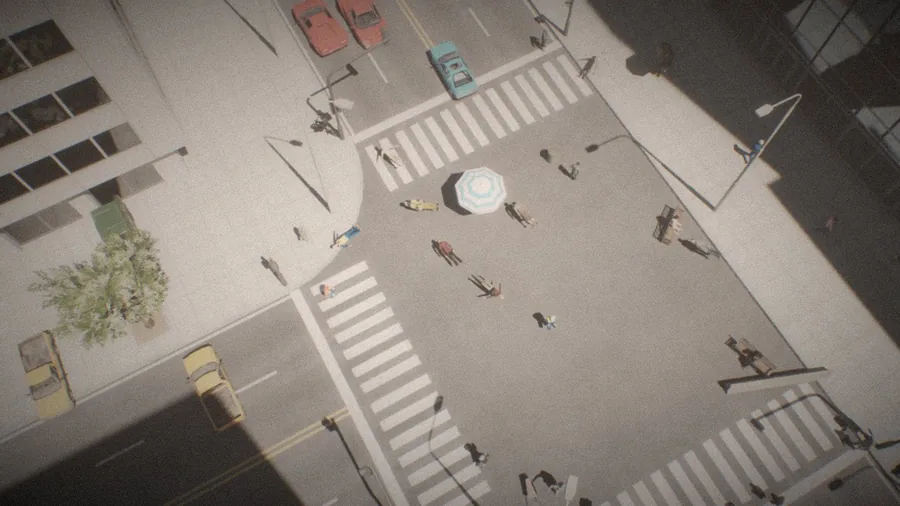
Modern city junction
One camera box over a crossroads, 28 to 46 m, 1280×720
The same place, in weather it has never had
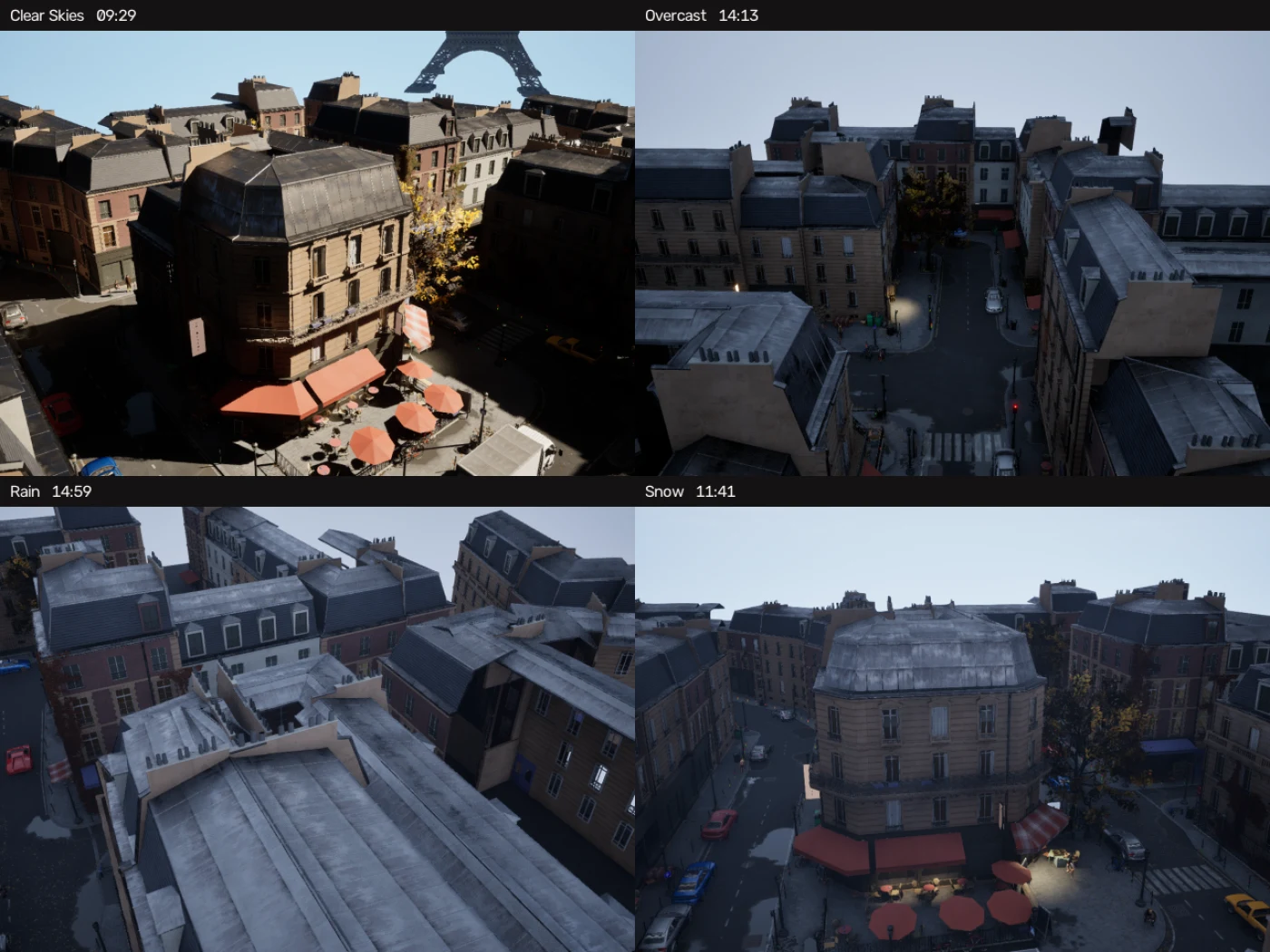
This is the argument for capturing a scene rather than filming one. The four frames below are one street corner. Nothing moved between them but the sky and the hour, and the shadows, the wet ground and the visibility moved with it, because the weather was changed before the frame was rendered rather than painted on afterwards.
An environment is worth capturing when it can be put through conditions its author never shipped it in. That is the whole reason these nine are here and a folder of screenshots is not. How the mix is chosen, and how it goes wrong by accident, is a guide of its own.
Where these maps came from
None of the nine were modelled by us. They are third-party Unreal environments, bought or licensed, and dressed with a capture contract. What NameFrame produced is the frames and the labels, and that is all any archive on this site contains: no map, no .uasset, nothing of the environment itself is redistributed. The dataset pages say the same thing in the terms that ship inside each pack.
That boundary is also why no author is credited by name on these pages yet. Crediting a seller beside their own work is a claim about a relationship, and we do not have one with any of them.
If you author Unreal environments
There is an obvious trade here and it is worth saying out loud. A capture run produces a few hundred frames of a scene across every hour and every sky it can be given, deterministically, in an afternoon — which is a quantity of presentable imagery of your own map that is tedious to produce by hand. We want scenes we did not build, because a pipeline that only works on maps its authors chose has proved very little.
What we would agree first is the licence: what we may render, what we may publish, and how you want to be credited on the page it appears on. The rest is scheduling.
This opens your mail client with those questions already in the body. If you would rather not use email, send the same answers however you like to hello@getnameframe.com.