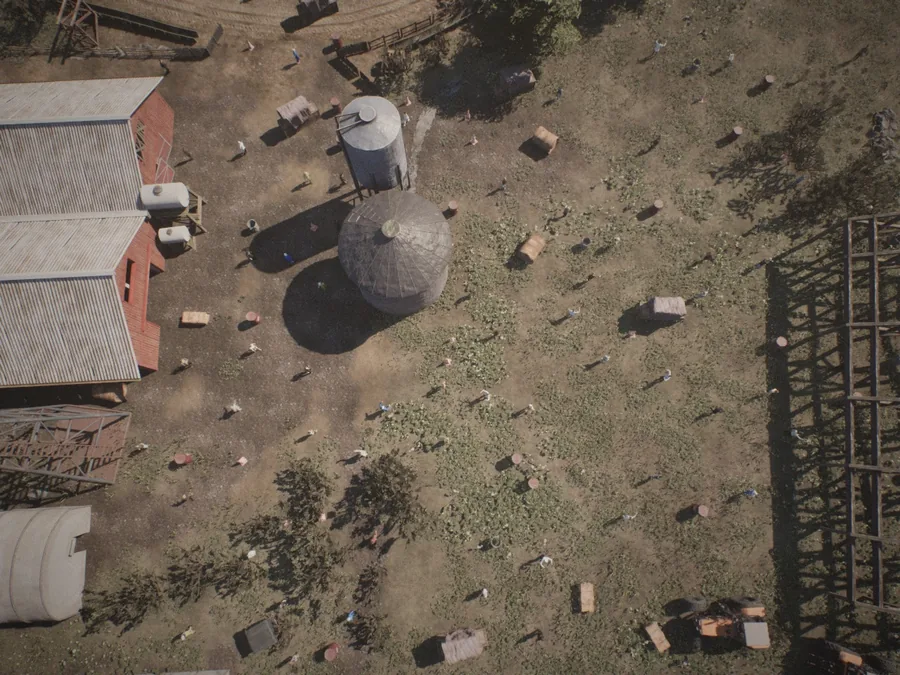
Straight down from 18 metres, where everything is small.
The near-nadir camera is the one people actually ask for, because it is what a survey drone flies. It is also the policy that makes every object small, removes the silhouette a detector leans on, and turns ground contact into something you have to verify rather than assume.
- Camera
- Near-nadir, 18 to 45 metres altitude, 1280×960
- Frames in the run
- 300
- Labelled instances
- 15,369
- Classes
- 7
- Validator grade
- A · 92.2/100
What this scene is hard for
The reason it is one of the nine, rather than a prettier map that would have proved less.
- The near-nadir viewpoint, where an object is a footprint rather than a shape and a detector has no silhouette to recognise.
- Standing vegetation, which hides where an object meets the ground — the check that catches a prop floating above the terrain.
- Animals and people at similar sizes from directly above, which is the confusion this scene exists to produce.
- A class distribution the validator flagged as imbalanced, which is on the dataset page with the points it cost.
Frames from the run
Chosen by eye out of the frames published for this capture, with what each one shows. They are the run's own contact-sheet images at the size the site publishes them, not stills re-exported for this page.
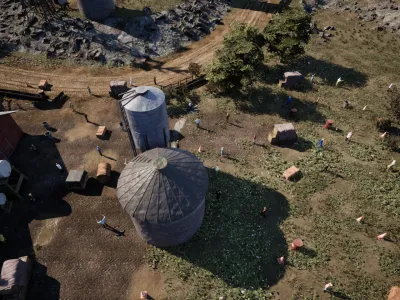
The silos and the barn roof from low over the yard, with the track curving past 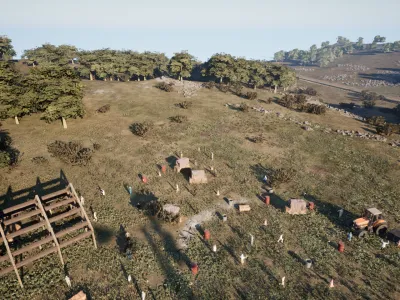
Wide across the field to the tree line, one of the few frames here with sky in it 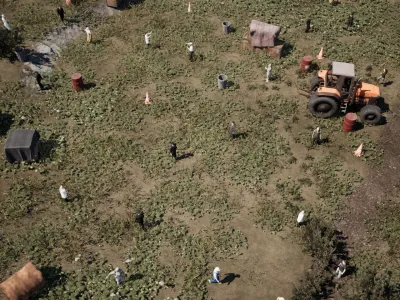
Near-nadir with the tractor: every object seen from directly above, none of them in silhouette 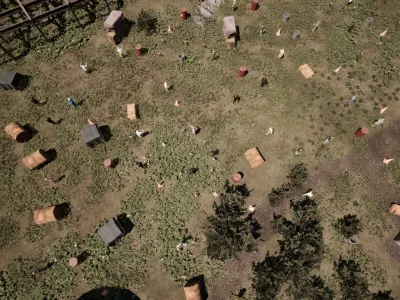
The scatter at its densest, props and animals spread across standing vegetation 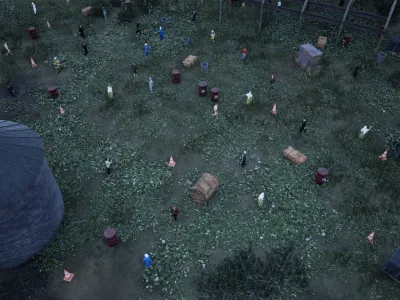
Morning mist flattening the yard until the contrast is nearly gone 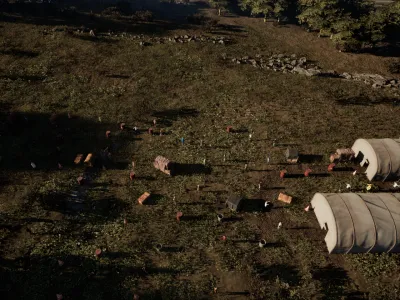
Late light, with the field mostly in shadow and the props down to dark shapes against it
Where this map came from
We did not model it. It is a third-party Unreal environment, dressed with a capture contract, and what NameFrame produced is the frames and the labels — no map and no .uasset is redistributed in any archive on this site. No author is named here because we have no agreement with one; if this scene is yours and you would like it credited, write to hello@getnameframe.com.
The data itself is on the capture’s page
This page is about the place. The archives, the validator’s findings, the class list, the checksums and what is wrong with the run are on the Barnyard capture, which is the one page on this site that means this dataset.